
Understanding Vision Tests For Cataract Patients
Cataracts are one of the most common causes of gradual vision changes, especially as people grow older. Many patients notice that their eyesight slowly becomes blurry, dim, or more sensitive to glare, but they may not fully understand how eye specialists evaluate these changes or decide when treatment is needed.
Vision testing plays an important role in diagnosing cataracts, understanding how much they are affecting eyesight, and planning the right treatment approach. These tests help ophthalmologists evaluate not only the cataract itself but also the overall health of the eyes.
At Dr. Vanuli Bajpai’s Eye Care Center, patients receive detailed cataract evaluations and advanced retinal assessment using modern diagnostic technology. Dr. Vanuli Bajpai is an Ophthalmologist, Senior Cataract Surgeon, and Medical Retina Specialist associated with Manipal Hospital Dwarka, offering comprehensive and patient-focused eye care.
What Are Cataracts?
A cataract develops when the natural lens inside the eye becomes cloudy over time. Normally, the lens is clear and helps focus light onto the retina, allowing sharp vision. When cataracts form, the cloudy lens scatters light and makes vision less clear.
Cataracts usually develop gradually and may affect one or both eyes. Many people may not notice symptoms in the early stages because the changes often happen slowly.
Common Symptoms Of Cataracts
Patients with cataracts may experience:
- Blurred or cloudy vision
- Difficulty reading
- Increased sensitivity to light
- Glare while driving at night
- Faded or dull-looking colors
- Frequent changes in eyeglass prescription
- Double vision in one eye
- Difficulty recognizing faces
- Trouble seeing clearly in dim lighting
These symptoms may slowly worsen as the cataract progresses.
Why Vision Tests Are Important For Cataract Patients
Vision tests help ophthalmologists understand several important things, including:
- How much the cataract is affecting eyesight
- Whether symptoms are caused by cataracts or another eye condition
- The severity and location of the cataract
- Whether cataract surgery may be helpful
- Which lens options may be suitable for surgery
- Whether other eye diseases are also present
Comprehensive testing helps ensure safe treatment planning and better visual outcomes.
Common Vision Tests For Cataract Patients
Visual Acuity Test
This is one of the most common eye tests performed during a cataract evaluation.
Patients are asked to read letters from an eye chart at different distances to measure how clearly they can see.
The test helps assess:
- Distance vision
- Near vision
- Degree of visual impairment
- Changes in vision over time
Reduced visual acuity may indicate cataract progression or other vision problems.
Refraction Test
A refraction test measures how the eye focuses light and helps determine the correct eyeglass prescription.
Frequent prescription changes may sometimes suggest worsening cataracts, especially in older adults.
This test also helps doctors understand whether glasses can still improve vision or whether cataract surgery may be more beneficial.
Slit Lamp Examination
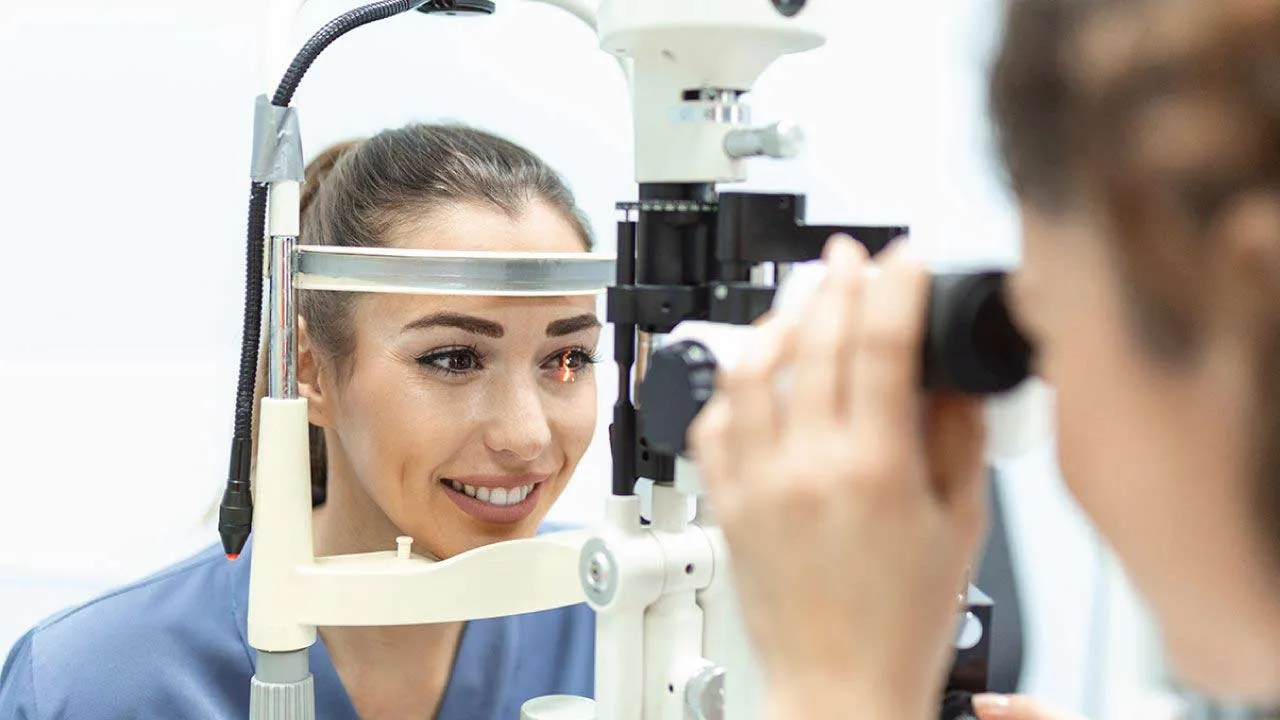
A slit lamp is a specialized microscope used to examine the structures of the eye in detail.
This examination helps evaluate:
- Lens cloudiness
- Cataract location
- Corneal health
- Retina visibility
- Other eye structures
The slit lamp examination is extremely important in confirming the diagnosis of cataracts.
Dilated Eye Examination
During this test, special eye drops are used to widen the pupils. This allows the ophthalmologist to examine the retina and optic nerve more clearly.
A dilated examination helps identify additional eye conditions such as:
- Retinal disease
- Glaucoma
- Macular degeneration
- Diabetic retinopathy
- Optic nerve disorders
Some patients may have multiple eye conditions contributing to vision changes, so a detailed retinal evaluation is important before cataract surgery.
Contrast Sensitivity Testing
Cataracts can reduce a person’s ability to distinguish between similar shades or contrasts, particularly in low-light environments.
This test evaluates how well patients can detect objects against different backgrounds.
Poor contrast sensitivity may explain problems such as:
- Difficulty driving at night
- Trouble seeing steps or curbs
- Poor visibility in dim lighting
- Reduced visual comfort indoors
- Glare Testing
Many cataract patients complain about glare from headlights, sunlight, or bright indoor lights.
Glare testing measures how bright light affects visual quality and comfort.
This test can help ophthalmologists understand how cataracts are affecting activities such as:
- Night driving
- Outdoor visibility
- Reading under bright lights
- Color Vision Testing
Cataracts sometimes cause colors to appear faded, dull, or yellowish.
Color vision testing helps assess whether cataracts are affecting color perception and visual clarity.
Retinal Evaluation
A retinal examination is an important part of cataract assessment because retinal diseases may also affect vision.
Even if cataracts are present, problems involving the retina or optic nerve may contribute to blurred vision.
A detailed retinal evaluation helps ophthalmologists provide more accurate treatment recommendations.
Advanced Measurements Before Cataract Surgery
If cataract surgery is recommended, additional measurements are often performed to help select the most appropriate intraocular lens, also called an IOL.
Biometry
Biometry measures important eye structures, including:
- Eye length
- Corneal curvature
- Lens power calculations
These measurements help determine the correct power of the artificial lens that will be implanted during cataract surgery.
Accurate measurements are extremely important for achieving better visual outcomes after surgery.
Corneal Topography
Corneal topography creates a detailed map of the cornea, which is the clear front surface of the eye.
This test helps identify:
- Astigmatism
- Corneal irregularities
- Suitability for premium lens implants
The information may help customize cataract treatment plans.
Optical Coherence Tomography
Optical Coherence Tomography, commonly called OCT, provides highly detailed images of the retina and macula.
OCT helps detect hidden retinal problems that may not always be visible during a regular examination.
This test is especially useful for identifying:
- Macular degeneration
- Diabetic retinal disease
- Retinal swelling
- Other retinal abnormalities
How Vision Tests Help Determine The Need For Surgery
Cataract surgery is usually considered when cataracts begin interfering with daily life and routine activities.
Vision testing helps doctors evaluate how cataracts are affecting:
- Reading
- Driving
- Watching television
- Computer work
- Mobility
- Overall quality of life
The decision for surgery is based not only on how the cataract looks but also on how much it affects daily functioning and visual comfort.
Are Vision Tests Painful?
Most cataract-related vision tests are painless and non-invasive.
Some tests may involve:
- Bright lights
- Temporary blurry vision after pupil dilation
- Mild sensitivity to light for a few hours
However, discomfort is generally minimal, and most patients can return home the same day after their evaluation.
Importance Of Regular Eye Examinations
Routine eye checkups are especially important for older adults and people with diabetes or other medical conditions.
Regular examinations can help:
- Detect cataracts early
- Monitor vision changes
- Identify retinal diseases
- Detect glaucoma
- Prevent delayed treatment
Early diagnosis often allows better treatment planning and improved long-term eye health.
When Should You Consult An Eye Specialist?
You should schedule an eye examination if you experience:
- Blurred or cloudy vision
- Difficulty driving at night
- Increased glare sensitivity
- Frequent changes in glasses prescription
- Trouble reading
- Reduced color clarity
- Difficulty seeing in low light
Prompt evaluation can help determine whether cataracts or another eye condition is responsible for your symptoms.
Conclusion
Vision tests are an essential part of cataract diagnosis and treatment planning. These detailed evaluations help ophthalmologists assess vision quality, cataract severity, retinal health, and overall eye function before recommending treatment.
At Dr. Vanuli Bajpai’s Eye Care Center and Manipal Hospital Dwarka, patients receive comprehensive cataract evaluation and advanced diagnostic care focused on preserving vision and supporting long-term eye health through personalized treatment planning.
FAQs
Q: What is the most common test for cataracts?
A: The visual acuity test and slit lamp examination are among the most common tests used to diagnose cataracts.
Q: Are cataract vision tests painful?
A: No, most cataract-related vision tests are painless and non-invasive.
Q: Why are pupils dilated during cataract evaluation?
A: Dilating the pupils allows the ophthalmologist to examine the retina and internal eye structures more clearly.
Q: Can cataracts affect night driving?
A: Yes, cataracts may cause glare and reduced contrast sensitivity, making night driving more difficult.
Q: What is biometry in cataract surgery?
A: Biometry measures the eye to calculate the correct artificial lens power for cataract surgery.
Q: How often should cataract patients get their eyes checked?
A: Regular eye examinations are important, especially if vision changes or cataract symptoms worsen.

Our Location
Find us easily with our location map for convenient visits and directions.


